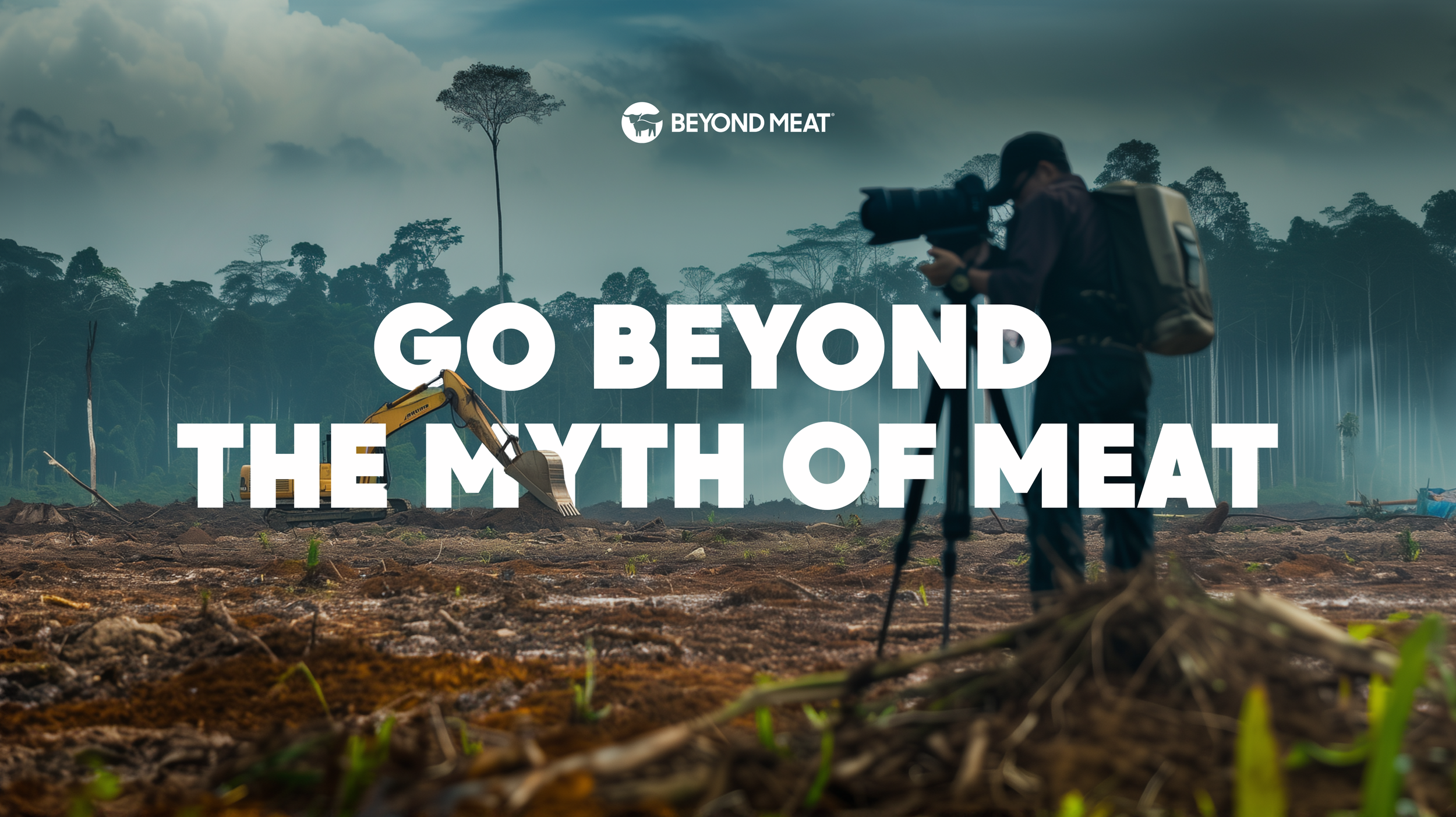
A thought-provoking campaign for Beyond Meat, establishing the brand as a leader in fostering a more sustainable and ethical future.
CLIENT:
Beyond Meat produces plant-based meat alternatives, providing an alternative to traditional meat.
THE PROBLEM:
Meat marketing paints a picturesque dream—where sustainable farming, endless green fields, and farmers lovingly care for happy animals. In this world, milk builds strong bones, and meat is key to strength. But beneath this charming façade lies a far less perfect reality.
THE GOAL:
To establish Beyond Meat as a brand committed to fostering a more sustainable and ethical future, taking a stand through what’s known as "brand activism." To challenge consumers to look beyond the misleading narratives used in meat marketing, empowering them to make more informed and conscious choices.
THE SOLUTION:
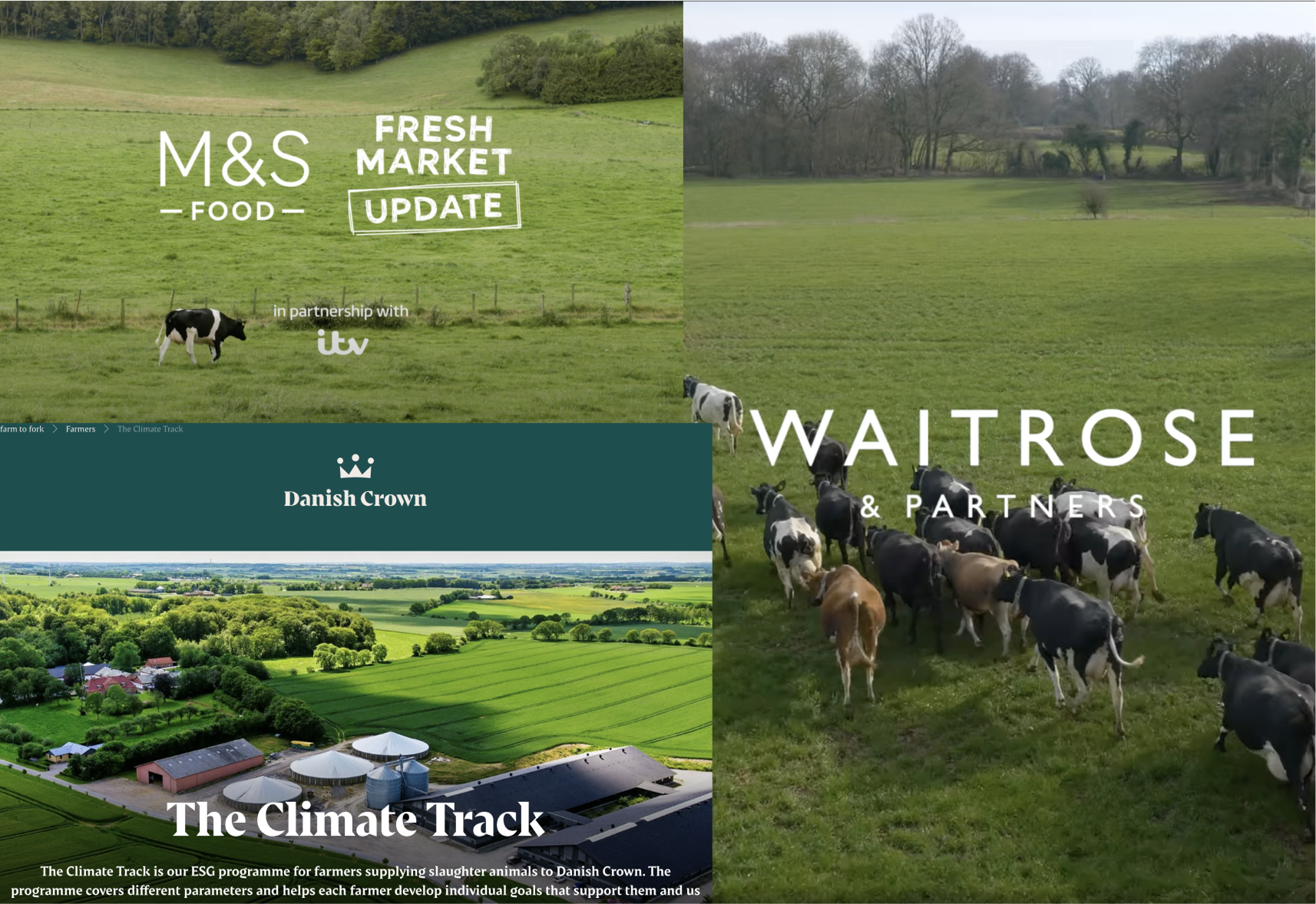
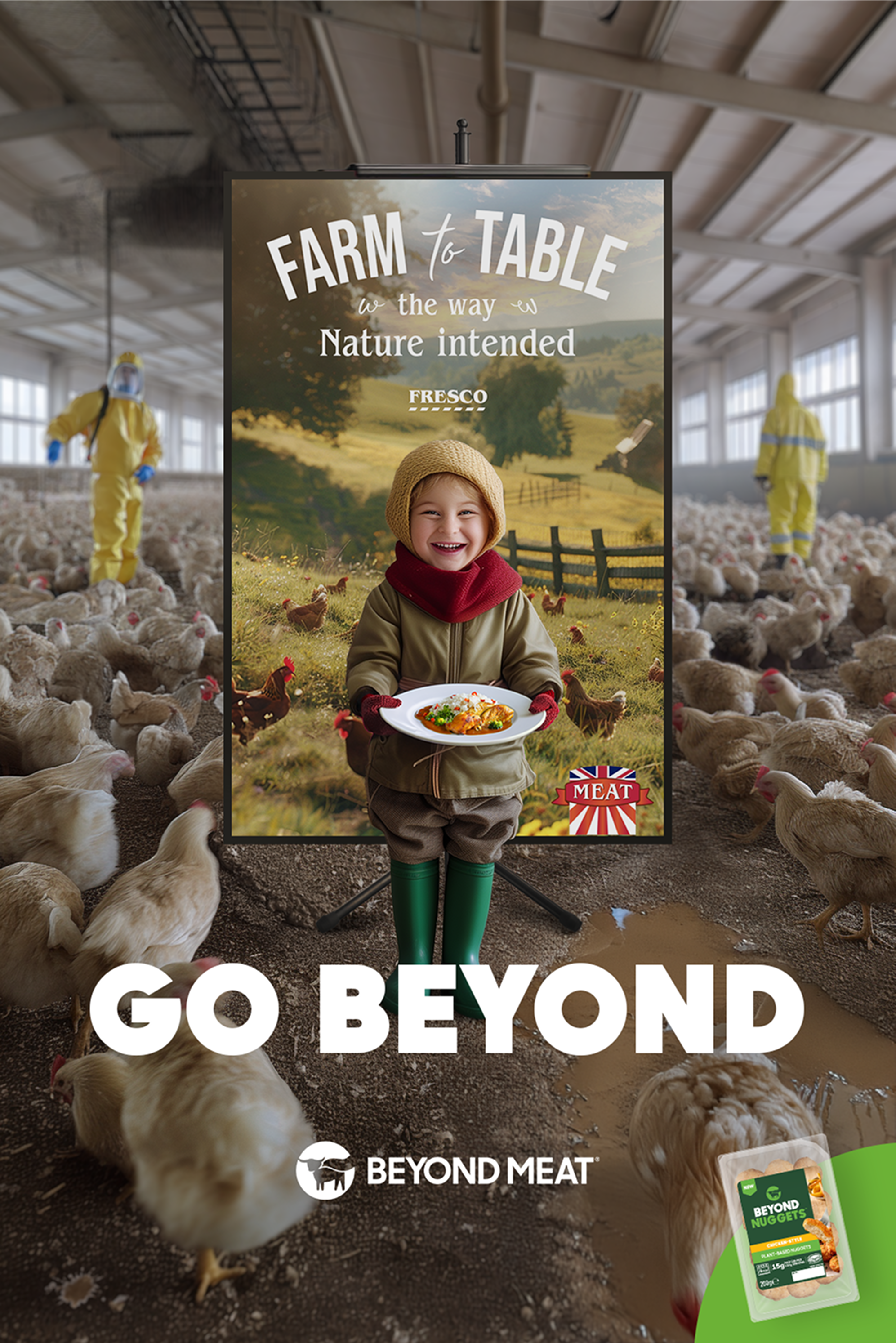
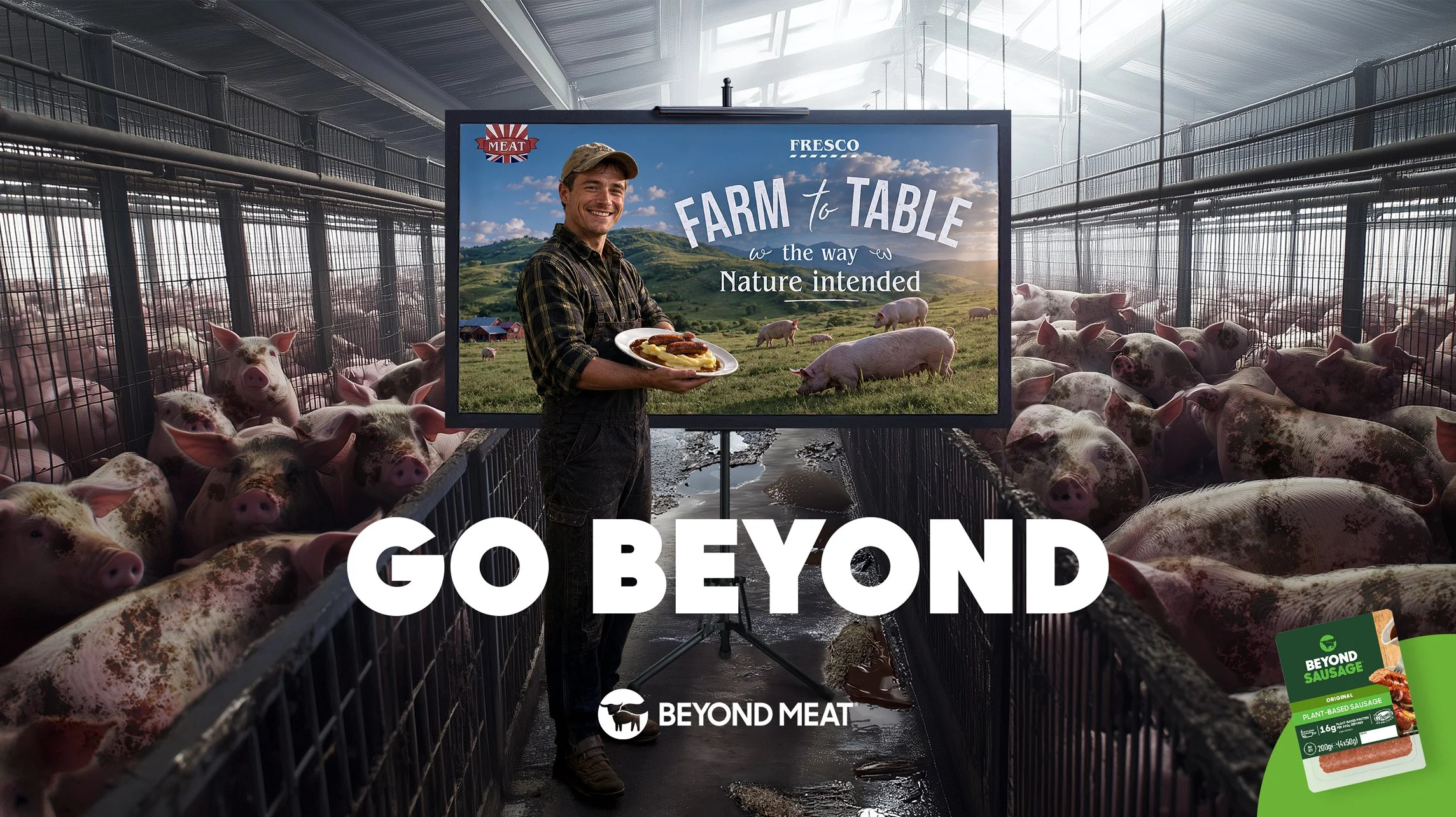
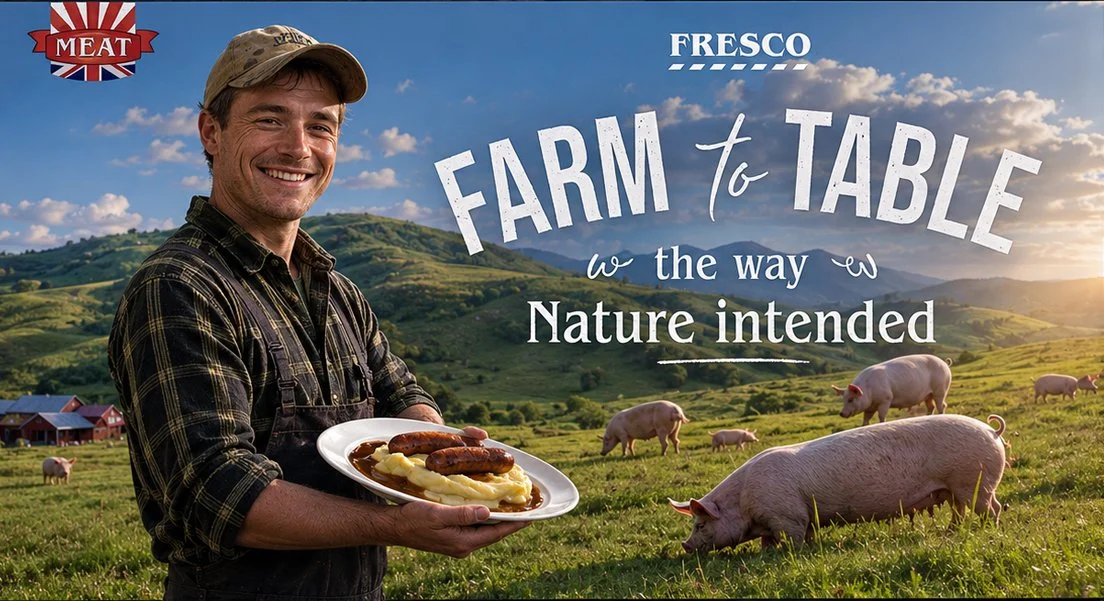
Three creatives, each tackling one of the main 3 myths of the meat and dairy industry. Each execution features a staged, typical meat ad at the centre—showcasing smiling farmers, happy animals, and picturesque landscapes, accompanied by slogans promoting sustainability and animal welfare. But as the viewer zooms out, the illusion crumbles. The photoshoot for these 'wholesome' ads takes place in environments far from these idealised scenes, exposing cramped, unhealthy conditions, environmental harm, and the deceptive tactics used to sell these myths.
Meat ads sell us an idealised world of happy farms and sustainability, but zoom out and the harsh truth of industrial farming and environmental damage is revealed.

1. The sustainable meat myth
Video loading…


1. The sustainable meat myth
The myth:
The meat industry marketing often presents itself as part of the solution to the climate and environmental crises, rather than acknowledging its role in causing them. By adopting ethical or sustainable labels that offer little more than symbolic meaning, it misleads consumers into believing that eating meat is good for the environment.
The truth:
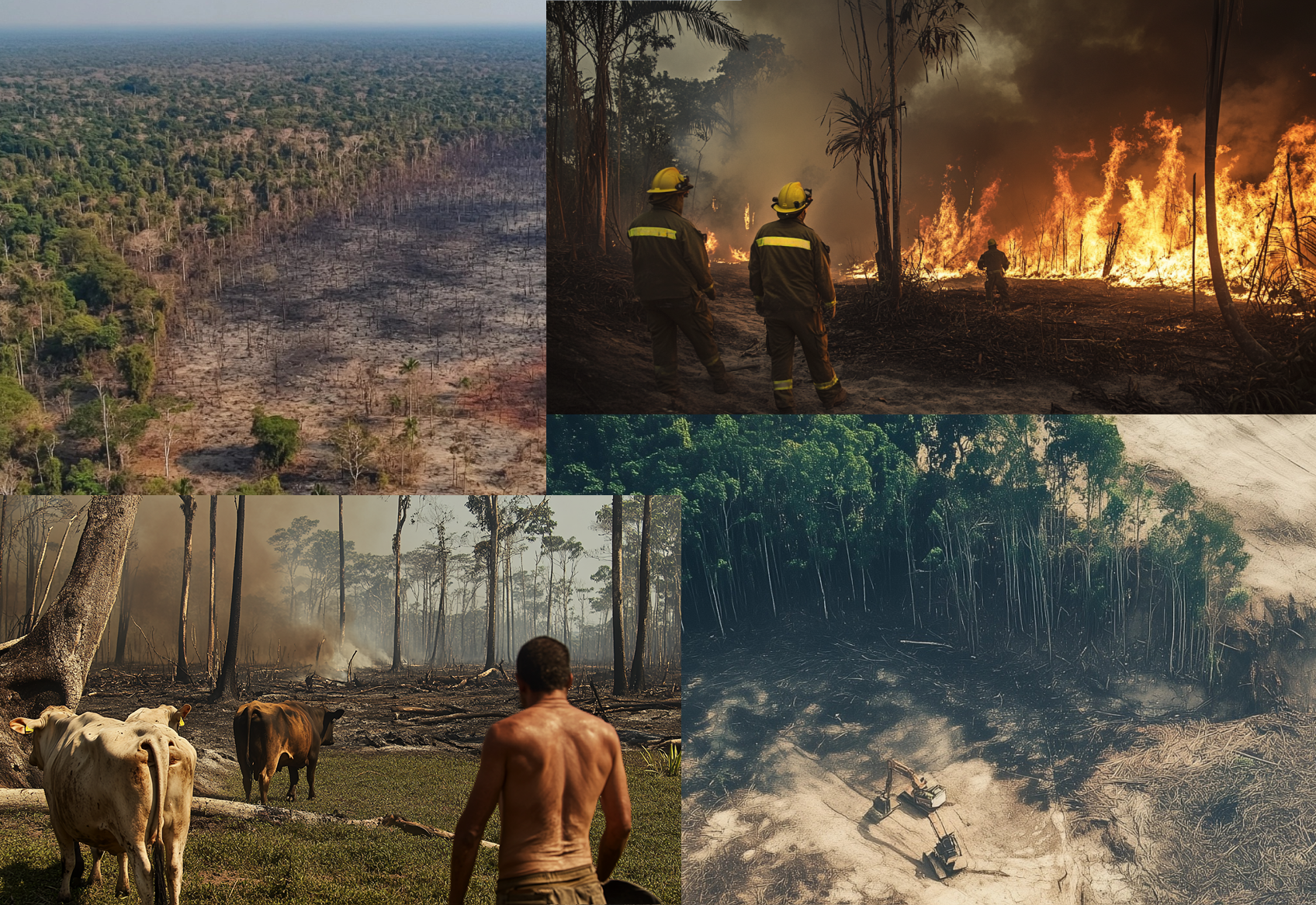
The rising demand for meat worldwide is intensifying the climate crisis, as the production of animal products contributes to nearly a fifth of global greenhouse gas emissions. Vast areas of forests are being cleared to make room for pasture and feed crops, further accelerating deforestation and biodiversity loss.

2. The healthy and natural meat myth
Video loading…

2. The healthy and natural meat myth
The myth:
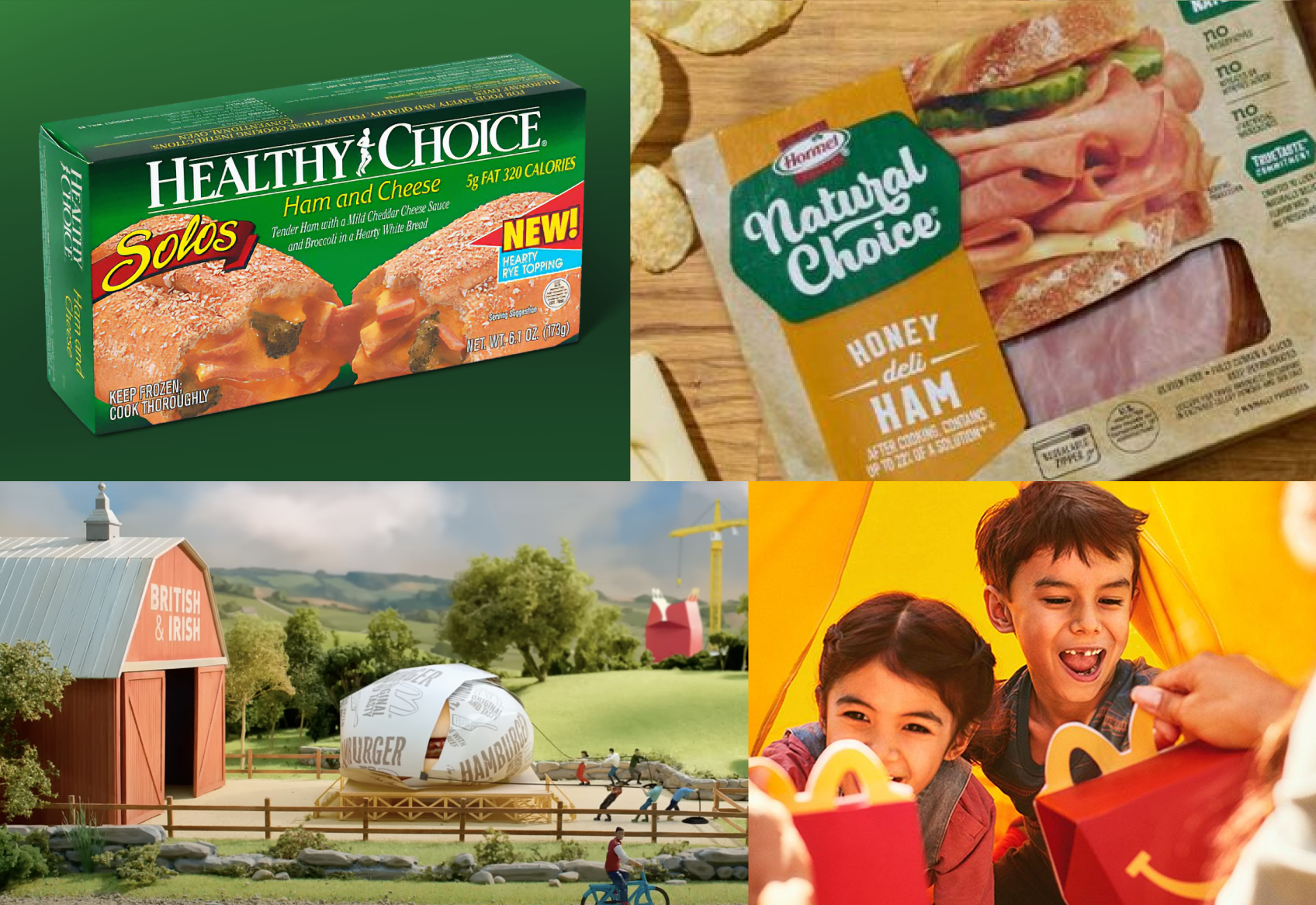
Meat marketing has long shaped perceptions of health and nutrition, reinforcing the idea that animal products are essential for a balanced, protein-rich diet. Through packaging, advertising, and messaging aimed at parents, it also cultivates the belief that meat is vital for their children’s growth and well-being, securing future generations of consumers.
The truth:
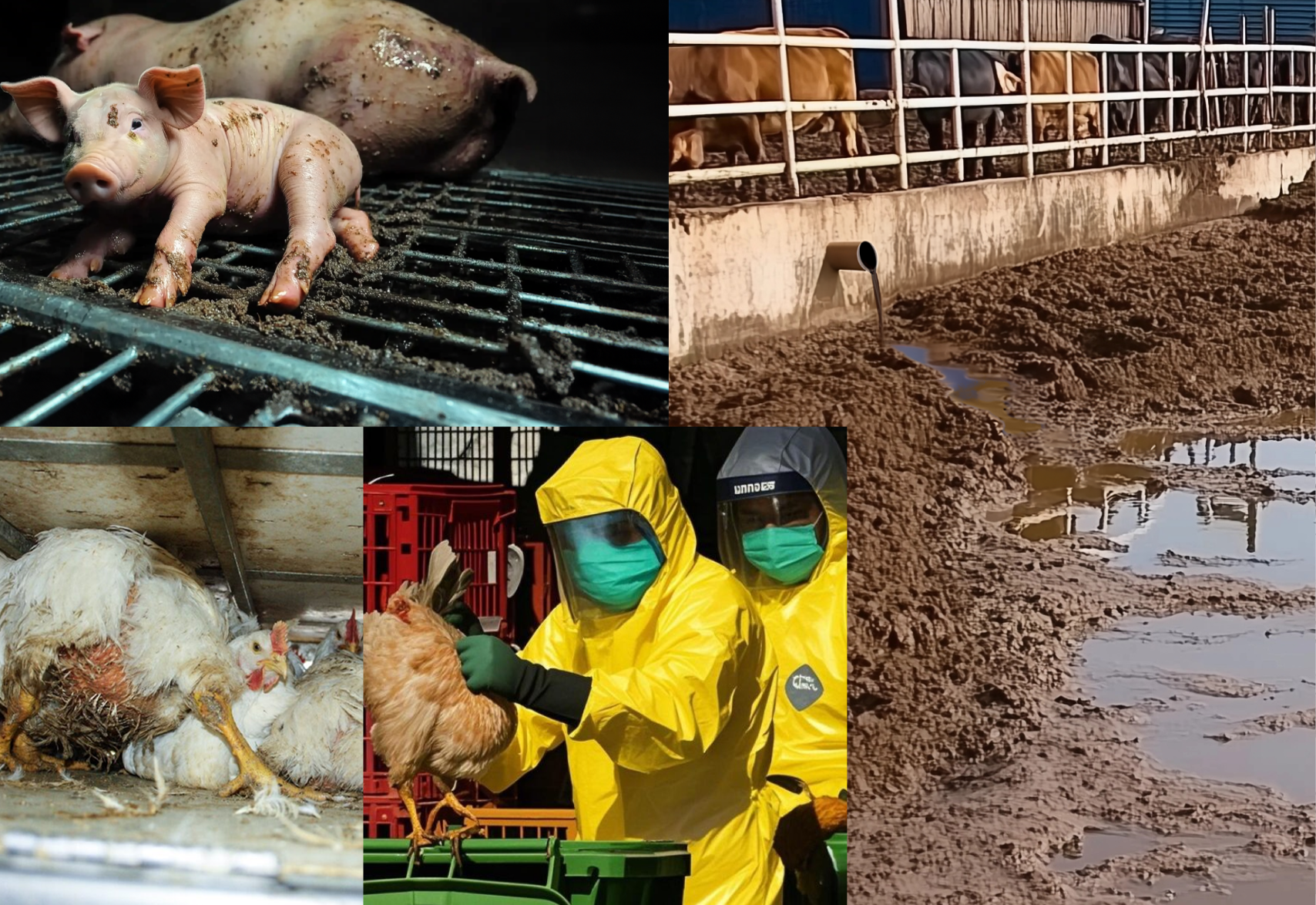
Research shows that plant-based foods provide all essential nutrients, including protein, without the health risks of meat. In contrast, industrial farms, are far from clean—animals live in overcrowded, unsanitary conditions, requiring routine antibiotic use. This practice fuels antibiotic resistance, posing serious risks to human health.
3. The happy animals myth

3. The happy animals myth
The myth:
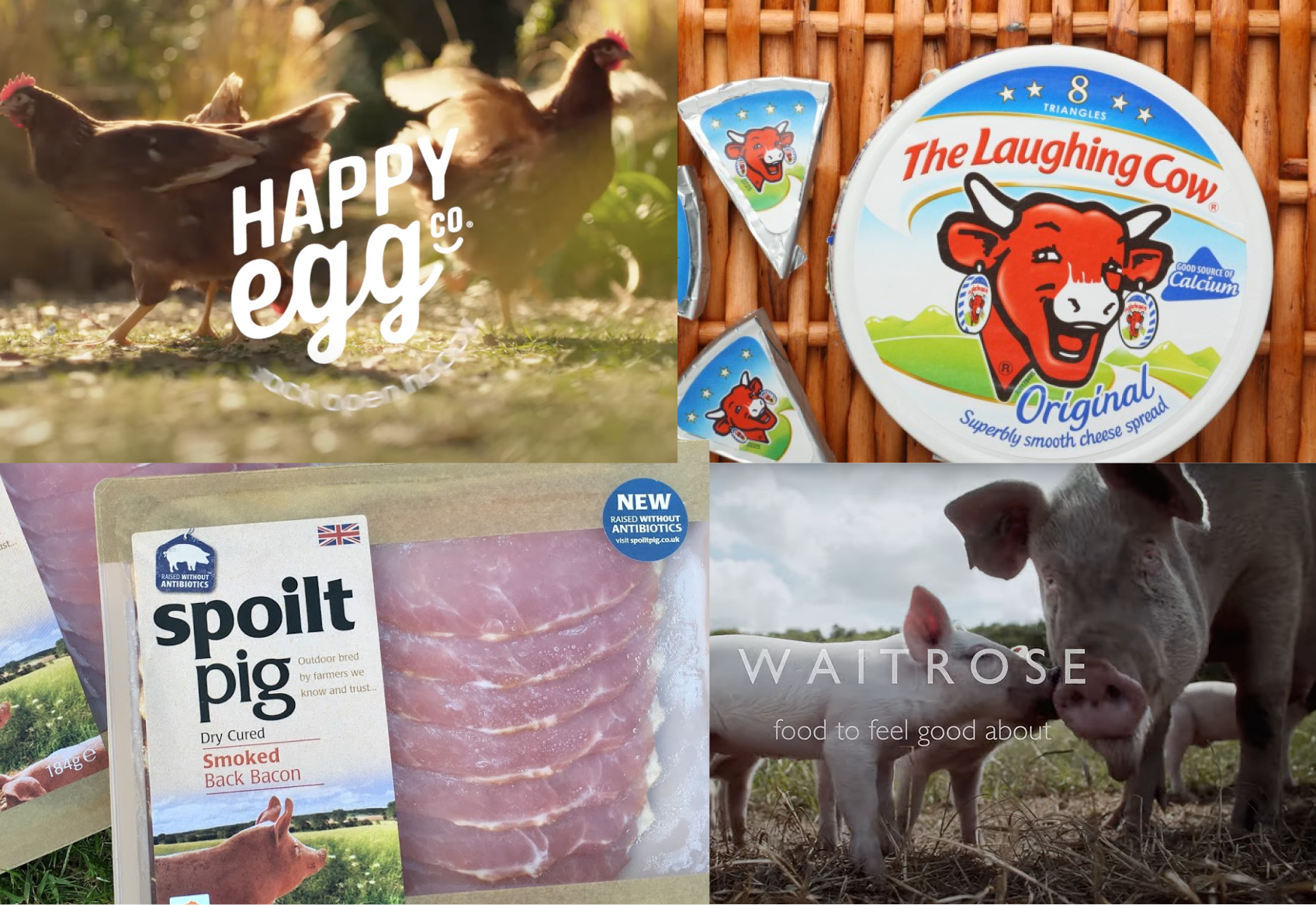
Meat and dairy marketing crafts a charming vision of farming with green fields, bright barns, and content animals. Packaging and ads use warm imagery and names like 'Sunny barn' or 'Merry hogs' to reinforce a reassuring narrative—one where farming is wholesome, animals are well-treated, and consumers can feel good about their choices.
The truth:
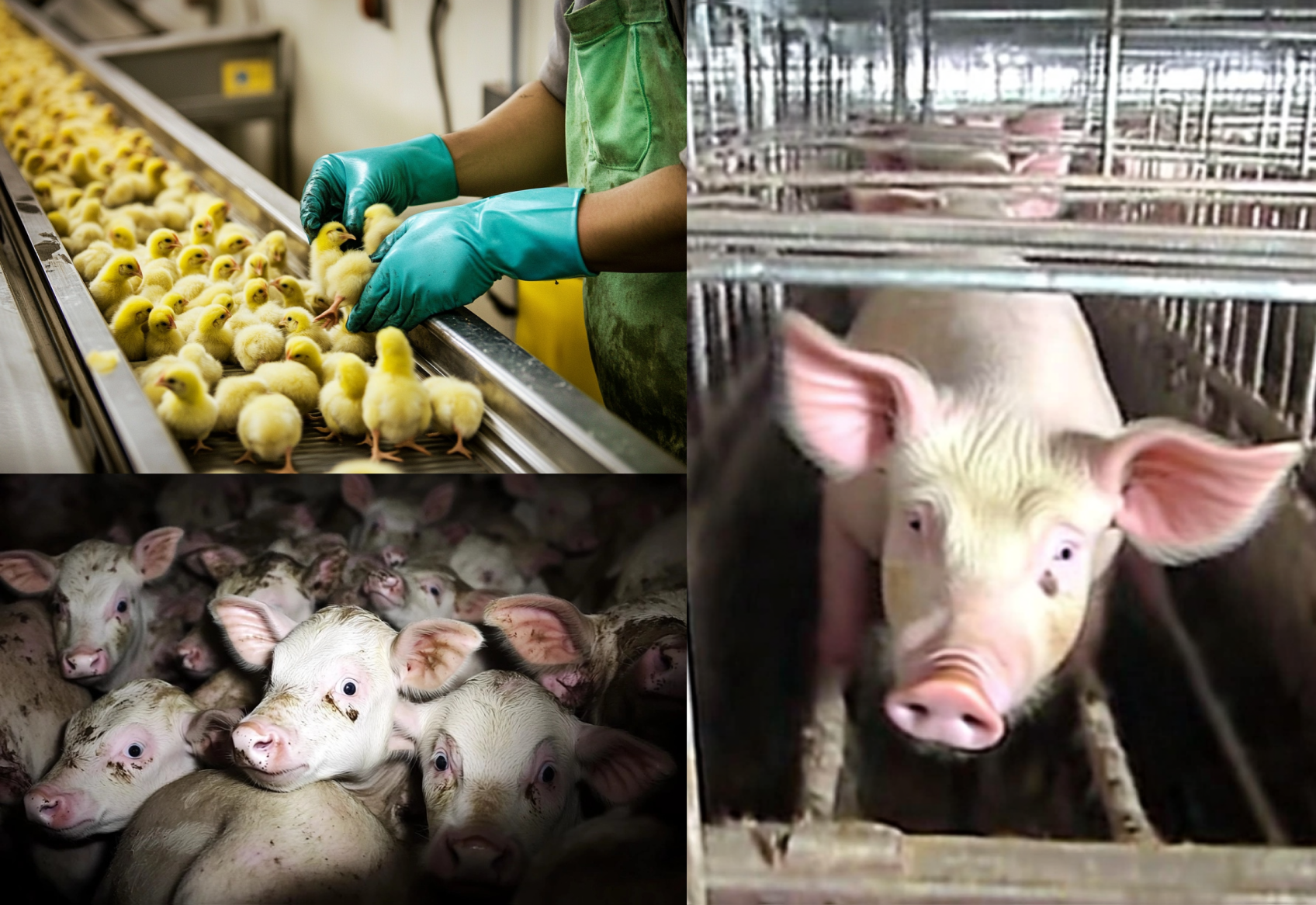
These are some of the harsh practices animals endure in industrial farming that meat marketing won't show us: beak cutting for chicks, tail docking for pigs, dehorning of cows, forced impregnation of cows, forced separation from their calves, overcrowding, lack of natural light and air, painful surgical procedures without anesthesia, electric prodding, slaughter... the list goes on.